




How to get rid of Rosacea Naturally
Rosacea is a chronic inflammatory skin condition that mostly affects women, in particular those with fair skin, but symptoms can be worse in men. If you are living with rosacea then you already know how challenging the discomfort and irritation can be. Although the exact cause of rosacea is unknown there are natural remedies that can help relieve symptoms and minimise flareups.
Lets take a look at the causes, symptoms and how to manage your rosacea naturally...
What Causes Rosacea?
The exact cause of rosacea is not fully understood, but it is believed to result from a combination of factors rather than a single trigger.
Genetics may play a role, as rosacea often runs in families. Many people with rosacea also have an overactive immune response and sensitive facial blood vessels, which contribute to ongoing inflammation, redness, and visible capillaries.
Certain lifestyle and environmental factors can make symptoms worse, including:
-
Sun exposure
-
Spicy foods
-
Alcohol
-
Hot drinks
-
Extreme temperatures
-
Stress
-
Some medications
These triggers don’t cause rosacea on their own, but they can lead to flare-ups in those who are prone to it. Identifying personal triggers and supporting the skin barrier are key steps in managing the condition effectively.
What Are The Symptoms of Rosacea?
The first sign of rosacea often starts with redness. It may appear like sunburn and can become acute on the cheeks as well as nose, forehead and chin.
Other symptoms include:
- flushing
- bumps or pimples
- broken blood vessels
- sensitive skin
- eye dryness and watering
What Does a Bad Case of Rosacea Look Like?
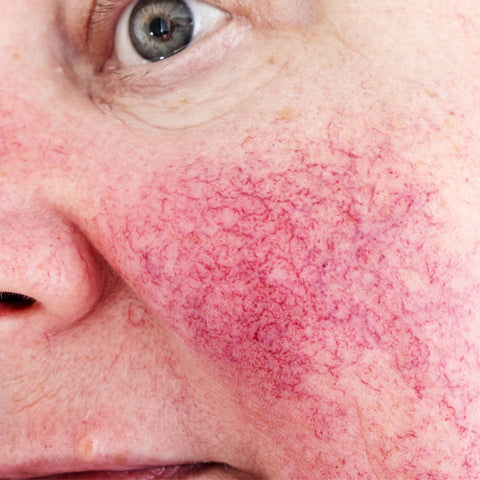
A severe case of rosacea causes ongoing facial redness that does not fade. The redness usually appears across the cheeks, nose, forehead, and chin and is often accompanied by visible broken capillaries (telangiectasia).
The skin may become inflamed and develop red bumps and pus-filled spots that resemble acne. Unlike acne, however, these breakouts occur alongside persistent flushing, heat, and skin sensitivity.
In advanced cases, the nose can thicken and enlarge due to excess tissue growth - a condition known as rhinophyma. People may also experience burning, stinging, dryness, and swelling during flare-ups.
Severe rosacea can be uncomfortable and affect confidence, which is why early treatment and trigger management are important to prevent progression.
How to Get Rid of Rosacea Naturally?
While there is no permanent cure for rosacea, you can manage and reduce flare-ups naturally by calming inflammation and protecting your skin barrier. A gentle, consistent skincare routine is one of the most effective ways to keep symptoms under control.
Simplify Your Skincare Routine and Choose Soothing Ingredients
Avoid harsh cleansers, exfoliants, synthetic fragrances, and alcohol-based products, as these can trigger redness and irritation. Keep your routine minimal, calming, and supportive of sensitive skin.
At the same time, choose ingredients known for their soothing and anti-inflammatory benefits, such as:
-
Aloe Vera – Helps cool, hydrate, and reduce visible redness
-
Lemongrass (in carefully balanced amounts) – Supports clearer-looking skin and overall skin health
The right formulation is essential. When blended correctly, these natural ingredients can help calm irritation and reduce flare-ups without overwhelming delicate skin.
Step 1: Cleanse Gently
Use a natural, organic cleanser bar that won’t strip your skin’s protective barrier. Cleansing twice daily with a mild formula helps remove impurities while maintaining hydration.
Step 2: Moisturise Daily
Apply a gentle organic moisturiser every day to strengthen the skin barrier, lock in moisture, and reduce dryness and sensitivity - both common rosacea triggers.
Try our Rosacea Natural Remedy Soap & Cream for daily care. Using these products consistently, helps calm your skin, reduce flare-ups, and promote healthier, more comfortable skin for lasting relief.

Rosacea Natural Remedy Pack >
Who is Most Prone to Rosacea?
While anyone can have rosacea and genetics may be a contributing factor, it's more likely to develop in people aged between 30 - 60. Rosacea is also more common in women especially during menopause. Studies have show that people from Celtic or Scandinavian background may also be at higher risk and those with fair skin.
Lifestyle Changes to Manage Rosacea
Managing rosacea often requires simple lifestyle adjustments to reduce redness and prevent flare-ups. Alongside a gentle skincare routine, avoiding common triggers can significantly calm inflammation and improve overall skin comfort.
Common triggers to limit or avoid include:
-
Spicy foods
-
Alcohol
-
Hot drinks
-
Extreme temperatures (very hot or cold weather)
-
Overheating and hot showers
Stress is also a major contributor to flare-ups. Practising relaxation techniques such as meditation, breathing exercises, or yoga can help stabilise the skin and reduce sudden flushing.
Taking a holistic approach - combining supportive skincare, balanced diet choices, and stress management - plays an important role in controlling rosacea and maintaining healthier, calmer skin.

Comments
Am Joe Charles i live in United States, i was diagnosed three months ago, some don’t feel any symptoms. i went in for a infection on my right foot that was caused by a bug bite and they couldn’t find any infection source. i was then told they did a HSV test i came reactive. i wanted to end my life at that moment, I’m lucky to have a supportive sister whom I tell and she gave me the link website of dr kuriama she saw online and after i contacted him and ordered for his medicine i followed as prescribed for close to a month am totally cured and no outbreaks below am living his website Link
https://onetouchkuriamaherbal.weekly.com
WhatsApp +2349069653609
GENITAL HERPES CURE Hello every one i was diagnose with Genital Herpes now am free Dr sikies cure my herpes with Natural Herbs medicine thanks doctor am grateful. if you do need help to cure your herpes virus or any type of diseases contact Dr sikies email address: drsikies@gmail.com or call and add him on +2348163430143 he can also cure Hiv/Aids, Erectile dysfunction
make order now :https://drsikiesherbalcuremedicine.weebly.com
Hello, I want to share my testimony with all of you. I have daily 9 to 5 jobs but while I work, I try my luck at playing instant Lotto. On this particular day, I decided to seek help online regarding tips for winning the lottery and I saw many individuals testifying about Meduza spells. I reached out to him and informed him that I needed help to win the lottery and he clarified the process to me stating that after he casts the spell, it will take 48 hours for him to provide me the winning numbers which I accepted. I followed all his instructions and he provided me with the numbers to enter the Lottery. After the draw the following morning I received a notification on the Lottery app on my phone indicating that I was the lucky winner of $273 million on the New Jersey Lottery and I’m here to extend my heartfelt gratitude to Meduza. If you seek for help in any aspect of your life, Whats – App +1 807 798-3042 or Email: lordmeduzatemple@hotmail.com or visit: lordmeduzaspelltemple.com
Good day viewers, I wish to share my testimony with all of you. I have daily 9 to 5 jobs but while I work, I try my luck at playing instant Lotto. On this particular day, I decided to seek help online regarding tips for winning the lottery and I saw many individuals testifying about Meduza spells. I reached out to him and informed him that I needed help to win the lottery and he clarified the process to me stating that after he casts the spell, it will take 48 hours for him to provide me the winning numbers which I accepted. I followed all his instruction and he provided me with the numbers to enter the Lottery. After the draw the following morning, I received a notification on the Lottery app on my phone indicating that I was the lucky winner of $273 million on the New Jersey Lottery and I’m here to extend my heartfelt gratitude to Meduza. If you seek for help in any aspect of your life, Whats_App +1 (807) 798-3042 or Email: lordmeduzatemple@hotmail.com or visit: lordmeduzatemple.com
Hello everyone, I contracted Herpes’ i was told there is no Herpes cure except treatment to control it. I totally lost hope all i could think was losing my life because it was so embarrassing to have this virus. A few weeks ago I read about a possible natural cure which was guaranteed. And I ordered the treatment. After some weeks I got 100% cured. Now I’m so excited to share this testimony to every article for others living with herpes and other illnesses . There is a possible natural treatment to eliminate this virus, Dr Ogedegbe has the cure for all treatments visit his clinic email dr.ogedegbe6@gmail.com or reach him on whatsapp +2349121737553 He also has the following treatment for, HPV, ALS, CANCER, GONORRHEA, SYPHILIS, CHLAMYDIA, HIV/AIDS, PSORIASIS, HEPATITIS A,B,C ETC…